Before I get into why I left school counseling, I think it’s important to share why and how I became a school counselor.
Why I Became A School Counselor
“How would your mom feel if she doesn’t see you walk across that stage and graduate?”
My high school counselor asked me that question when I was 16 (or right around that time). I was a struggling high school student that was behind in credits. At that moment, I knew I did not want to disappoint my mom so I got my act together. I did all my work and even asked teachers for extra assignments.
During this time, I began to grow closer to my school counselor. Because I was also going through family problems, I would go and talk to her about what was happening at home. My meetings with my counselor were pretty much me venting and her listening. I don’t remember her saying much, but it’s crazy to think that even though she did not say much to me, her listening, making herself available to meet with me, and posing that question about my mom and graduation had a huge impact on me.
When I would go see my school counselor and wait to see her, I would observe the other counselors. In observing them, I thought to myself, “this seems like a cool job.” I liked seeing the relationships they had with the kids. I even went as far as asking one of them, “What do you need to become a school counselor?”
Who knew that these moments would be so pivotal in shaping the rest of my life? Because of the impact my high school counselor had on me and the work I saw the other counselors do, I decided I wanted to pursue this career. I specifically wanted to become a high school counselor so that I could be for teenagers what my counselor had been for me.
Because of my school counselor’s support, I was able to graduate high school on time and make my mom proud.
To put a bow on this story, I actually got to speak to my high school counselor in my late 20s, and she was able to hear my story and the impact she had on me.
How I Became A School Counselor
Right after high school, I went straight into college and majored in psychology because I was interested in counseling. I even took an education course to better understand teaching, since I wanted to be a school counselor.
It took me five years to finish college, as I went part-time a couple of times and had a period when I was in the hospital. My college record wasn’t perfect, but I turned things around toward the end and graduated with honors. I was the first in my family to earn a college degree.

Shortly after, I applied to a few school counseling programs, with Hunter College as my top choice. Hunter College is a competitive school, and getting in felt like a huge accomplishment, especially knowing that I was a struggling high school student. This was all a big deal for me! Thinking about it still makes me emotional.
It took a couple of years to finish my graduate program. Unlike undergrad, I did exceptionally well in graduate school. I learned so much, especially in the clinical courses that built self-awareness and required deep reflection on my counseling skills and case studies. In addition, I completed a semester-long practicum and a year-long internship. By the time I graduated, not only was I the first in my family to earn a college degree, but also the first to earn a Master’s with honors.

4 Reasons Why I Left School Counseling
Soon after graduating with my Master’s degree, I landed my first school counseling position at a high school. I was beyond thrilled and started my career full of passion and excitement. Many of the roles I held were relatively short-lived, but in each job, I experienced some kind of challenge and ultimately, those challenges became the reasons I left. Below, I’ve outlined the reasons that led to my decision to leave school counseling.
Challenging Student Behavior
One of the top reasons I left school counseling was that I simply did not like dealing with challenging student behavior. Kids, whether in elementary, middle, or high school, can be mean, obnoxious, and disrespectful. I had situations where kids would either not listen or even hit me. As a counselor, I understood that this was often a reflection of what was happening at home or their lack of skills to communicate and cope properly. I knew it was never personal, but it still affected me.
I also did not like telling kids what to do at all. Perhaps it was the counselor in me for why I did not like it but in education, you have to be direct with kids at times to enforce expectations and structure. For some reason, I never felt comfortable speaking to them in a stern way when I needed to or telling them what to do. On top of that, when you put 20 or more kids together in a classroom, it becomes overwhelming, stressful, and frustrating.
Eventually, the challenging behavior I encountered across all of my roles, whether while teaching or in counseling sessions, made me dislike the work and, over time, become unfond of kids in general. Given what I experienced, I realized that I no longer wanted to work with kids, no matter their age. Since I no longer enjoyed or had an interest in working with kids, it became clear that school counseling was not for me. I just couldn’t imagine myself dealing with challenging student behavior long term.
Responsibilities That Did Not Align With My Education & Training
Another reason I left school counseling was that many of the responsibilities assigned to my roles were not related to what I learned in graduate school or were simply inappropriate for the school counseling role. Some of these responsibilities were:
- Teaching Social Emotional Learning (SEL)/advisory (another form of SEL programming)
- Reviewing transcripts, program changes, and managing the high school articulation process
- Proctoring exams and covering classes
Below I share why these responsibilities do not align with the education and training of a school counselor. This is my stance on why these duties are a problem for the role. Many school counselors face similar expectations. Over time, this disconnect between training and misaligned responsibilities caused me deep frustration and often brought me to tears.
While some educators and school counselors believe teaching SEL/advisory is appropriate for the role of a school counselor, I do not. A fixed SEL/advisory schedule conflicts with the counselor role in many ways. It reduces time for mandated and at-risk students, limits flexibility to consult with teachers and families, facilitate mediations, provide emotional support, plan counseling activities, complete case notes, and write IEP reports. Teaching also requires disciplining and redirecting behaviors, which can damage trust and make students see the counselor as punitive. Finally, it limits immediate access for students in crisis, including those with suicidal ideation or behavioral challenges, creating serious safety risks. I experienced all three of these challenges while teaching SEL/advisory.
School counselors are not trained to be teachers. Their expertise is supporting students’ social-emotional goals and needs through counseling. Teaching and counseling are two different skill sets, and assigning counselors to a fixed teaching schedule takes them away from their primary responsibilities.
Reviewing transcripts, managing program changes, and handling the high school articulation process are not areas in which school counselors receive professional training. While they support academic growth by helping students build skills like goal setting, organization, and time management, these administrative responsibilities are not counseling work. They require extensive coordination, including reviewing transcripts, placing students in courses, communicating with families and other schools, navigating student information systems, and tracking deadlines and forms. While important, these tasks are primarily administrative and reduce the time available for direct counseling, which impacts students’ social, emotional, and academic growth.
School counselors are not academic professionals or teachers and should not be assigned tasks such as proctoring exams or covering classes. Being pulled into these responsibilities reduces their ability to provide consistent support for mandated and at-risk students. Consistency is essential, especially for students who rely on regular counseling support, and covering classes or proctoring limits their access to those services.
These are my reasons for why these responsibilities do not align with the education and training of a school counselor, and my experiences have made it very clear that there is a significant disconnect between what is taught in graduate school and what is expected on the job. The assignment of the kinds of duties mentioned above also reflects how the school counselor role is being misused as a whole. Additionally, this list does not fully capture the range of responsibilities that other school counselors are asked to take on that may also fall outside the scope of the role.
I often heard in graduate school that theory would not always translate perfectly into real-life settings and that the work of a counselor would not look exactly like what we learned in school, which I understood. However, this issue goes beyond theory and real life settings. The real problem is that the actual skills school counselors are trained in are often not being used at all. Instead, school counselors are being assigned responsibilities that have nothing to do with their training or expertise. This represents a bigger systemic issue where the role itself is being misused, which ultimately prevents counselors from doing the work they were educated and trained to do in the first place.
These misaligned responsibilities placed a significant professional and emotional strain on me. I simply do not agree that these duties should fall on a school counselor, and it is something I cannot justify or make sense of. Because I encountered these same challenges in every position I held, in one way or another, I ultimately decided that this career is no longer for me.
The Misunderstanding of the School Counselor Role
Another reason I left school counseling is because of the misunderstanding of the role. As I mentioned earlier, the misalignment between training and assigned tasks already shows how misunderstood the position is. Beyond the tasks themselves, this misunderstanding showed up repeatedly through school leaders, staff, social workers, and the environments I was expected to work in. This happened in many different ways.
Throughout my career, there was this messaging from colleagues and school leaders that my role was limited to academics. This messaging didn’t always come directly or explicitly as it often showed up through side comments, confused looks, or surprised reactions when I worked with students beyond academic concerns.
One example happened while I was counseling a group of students who were opening up about deep family issues. A teacher assistant doing her social work internship barged into the private space I was using and kicked us out so she could use the room. The students told her, “We were having a good conversation.” Later, I confronted the intern, and she said, “I thought you only do academics, which is why I don’t think you need the room.” I responded, “But I was actually having a counseling session where the students were opening up about personal family issues.” She looked surprised.
Another example is when a mandated counselor with a school psychology background told me she encourages students to see her as a “cheerleader,” while my role was “just someone who helps them with their credits and academics.” These moments stuck with me because they showed a larger issue: how misunderstood the school counselor role really is.
There were also times when other student support professionals and school leaders didn’t realize that school counselors are qualified to provide mandated counseling. Their surprise was telling and really reinforced just how little the role is understood.
Another clear way the misunderstanding of the school counselor role showed up was through the lack of appropriate counseling space. Throughout my career, I worked out of cubicles, shared spaces, or held sessions in hallways, staircases, or wherever space was available. In one school, designated counseling offices were prioritized for social workers, based on the belief that they handled mandated and social-emotional counseling, while school counselors only handled ‘academics.’ If counselors needed private space, we got whatever time was left, which sent a clear message about whose work was considered legitimate. In other cases, I shared a room with other counselors or social workers, often limiting privacy and consistency for students. The spaces counselors are given reveal not only how misunderstood the role is, but also how little respect the job receives. This was not simply an issue of space, but a reflection of how the school counselor role is not understood, respected, or valued.
The misunderstandings described in this section go beyond personal perception and directly affect collaboration. When the role of a school counselor is not understood or valued, communication breaks down, responsibilities become misaligned, and counselors are often left out of conversations essential to supporting students. There were many times I was left out of decisions or not given important information that I should have had as a counselor. For a long time, I felt wrong for wanting communication, collaboration, and my own counseling office. Looking back, I realized there was absolutely nothing wrong with wanting communication, collaboration, understanding, and my own office to serve students as best as possible and do my job effectively.
I want to be clear that this isn’t just about other people misunderstanding the role of a school counselor. I know some people say, “You shouldn’t allow other people’s misunderstandings to define your work,” and to some extent, I understand that. But the misunderstandings showed up everywhere: in the responsibilities I was given, in how the role was perceived, in the lack of collaboration, and in the spaces I was expected to work in. It becomes extremely challenging to do the work the way you’re trained to when the people around you aren’t operating with the same understanding of your role. Unfortunately, I encountered this in every school I worked in, in one form or another. When you layer that on top of challenging student behavior and misaligned responsibilities, it becomes too much.
Ultimately, these experiences made it clear that the school counselor role was deeply misunderstood, and it became something I no longer wanted to put up with, which is one of the reasons I chose to leave the field.
Poor & Ineffective School Leadership
I want to preface this section by saying that I will not be going into specific details about what happened at my last school. What matters here is not the details themselves, but what this experience ultimately revealed to me.
At the last school I worked for, I found myself thinking, “Do I even want to work for a school with poor leadership?” Truthfully, I questioned why I should even care given that I was checked out of the career at this point. What I did not know at the time was that the answer to this question would later be revealed to me.
As my last days at that school approached, which I hadn’t anticipated since I didn’t know December 1, 2025 would be my last day, a lot came to light. It felt like God or the Universe was saying, “Look at what you are about to leave. Here is another reason why you need to go.”
At this last school, I realized there were deep systemic and leadership issues. This became clear when I was assigned to teach SEL again, after it had previously been taken away to protect my time. Once again, I was given a responsibility that didn’t align with the school counselor role, for all the reasons I’ve already described. On top of that, the reasoning behind the decision revealed even more dysfunction within the school.
Because of this, I advocated for my role in a meeting with the principal, outlining all the reasons I did not agree with the SEL teaching assignment. They heard my points but explained the expectation remained. I expressed the dysfunction and disconnection I was seeing as it related to their decision. When we could not come to an agreement, they assumed I was resigning on the spot and pushed me out. When HR reached out to confirm my resignation, I explained that the principal had misinterpreted the meeting and that I had intended to give a three-week notice. Given the nature of the meeting, I went along with what they were saying and left. Since I did not want to argue over technicalities, I wrote in the email that I resigned, even though I was pushed out by the principal.
After leaving, I began reflecting on my experience at that school. It was unfortunate to witness a principal who lacked important leadership qualities such as self-awareness, understanding, openness, accountability, respect, and the ability to self-reflect holding a position of leadership. Decisions were consistently made from a logistical and administrative lens rather than a student-centered one, with little consideration for how those decisions impacted staff. What was even more frustrating and sad was seeing people at this school being promoted into positions they were not qualified for, while not being held accountable for the wrong things they did. It became clear to me that when there are poor leaders, like the last principal I worked for, they are the ones hiring and promoting unqualified people, allowing the same dysfunction to continue.
Circling back to the question I had asked myself, “Do I even want to work for a school with poor leadership?” This experience answered it for me: no. When I was initially making a list of reasons why I wanted to leave school counseling, poor and ineffective school leadership was not on my list. However, I feel that in some ways, God or the Universe was showing me this additional reason why I needed to leave.
As I look back, I can see how everything that unfolded showed me that the school I was working at was under very poor leadership. Unfortunately, there are school leaders and principals, though not all, who lack effective leadership qualities and contribute to systemic issues within education. Deep down, if I am going to work for anyone or anything, I want leaders who are decent humans and who lead with both a rational mind and a good heart.
I had planned on leaving school counseling in a couple of years, even though there were many moments when I wanted to quit in between. The way it ultimately happened was not on my terms, nor in ways I imagined, because I was pushed out. Honestly, even though I was thinking about leaving within a couple of years, I am not sure if I would have actually done it. In many ways, the incident at my last job had to happen for me to leave. Given everything I experienced in school counseling and after this incident, this had to be it. Yes, I was pushed out from my last school counseling job, but I also made my choice. I decided I would not apply to another school counseling role again.
Looking Back: How I Came to My Decision
My whole mission in life was to become a school counselor, and it became the center of who I was. I remember feeling like I was living a dream when I landed my first school counseling position. I was thrilled and entered my career filled with passion and excitement.
But who knew that the career I pursued so passionately would later become the career I daydreamed about leaving? Wild, right?
When I first started questioning my school counseling career after just 2 years, I told myself I needed more experience to give it a fair shot. At the time, it felt too soon to make a decision with little experience. Now, after a little over 5 years in the field, I can say it’s not for me.
Looking back, given what happened in my last job and everything throughout my career, applying to another school counseling role didn’t make sense for me.
Part of the reason was that I had realized I no longer wanted to work with kids anymore. Dealing with challenging student behavior often left me so uncomfortable that I would cry in my office. I was so checked out that I told myself, “these kids deserve someone more passionate and invested.” This doesn’t mean I wasn’t doing my job, but I was no longer going the extra mile. That’s my honest truth. Some may judge me, but at least I am aware and have chosen not to return to school counseling, making space for those who are truly passionate and invested.
Additionally, the misaligned responsibilities and seeing how misunderstood the school counselor role was often brought on frustration and disappointment. There were many times I would go to the bathroom at work and call a friend to vent while I cried.
Working in a school system that does not fully understand the role of a school counselor is difficult, but it becomes even more challenging when a school is dysfunctional and under poor leadership.
Not only was I constantly frustrated, disappointed, and cried a lot, but I was often so exhausted at the end of each workday with little to no energy to do anything for myself. Toward the end of my career, it often felt like I was walking with a grey cloud over me or like I was in haze.
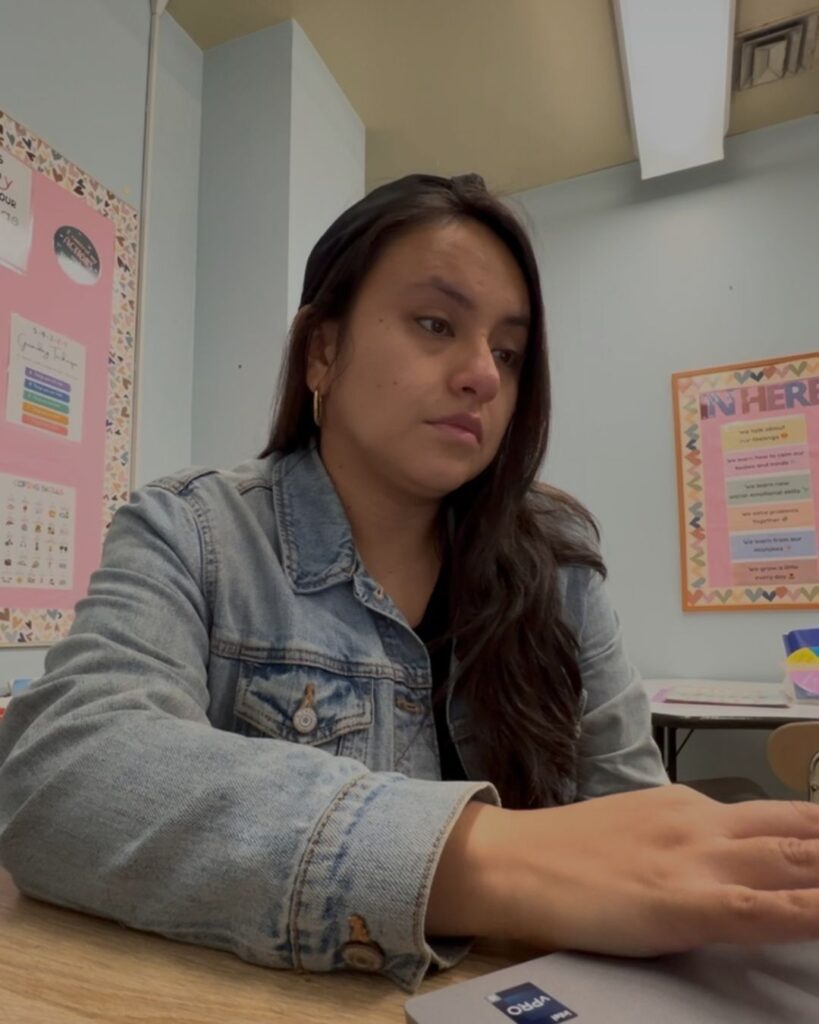
Honestly, the culmination of these things led me to feel tired of all of it. I was so over it that I did not want to keep trying to look for another role at different schools to make it work, because it was clear that this career was not a fit for me anymore. I also knew that wherever I’d go, I would just encounter the same shit. The negatives of this job defined everything for me, meaning that I could no longer find any valid or good reason to stay. In fact, the only thing that kept me at the job was the pay, time off, and benefits. Realizing all of this for myself made it clear that I needed to leave school counseling.
What’s Next?
As I reflect on my journey, I find it interesting that when I first began questioning my school counseling career, I was trying to hold onto it and the identity I had built around it. I held on because it was the job I always wanted as a teenager and always felt I was meant to be a school counselor.
But today, I don’t think about school counseling the way I used to. In fact, it’s something I barely even think about.
The fact that it’s not at the forefront anymore is clear that I am moving on and want to continue moving forward. In many ways, maybe it wasn’t meant for school counseling to work out so I could discover something more aligned with who I am and my passions/interests.
Which leads into the most common question I’ve been asked since leaving school counseling: “What’s next?”
My response is… I’m still figuring it out. As I continue figuring it out, you will find me dancing, writing, blogging, and sharing my journey.

Questions or comments? Feel free to add them down below!
Did you enjoy this post? Click here to subscribe so you’ll be the first to know when I publish a new post via email!